The International Coalition for Human Rights in the Philippines (ICHRP) Canada and MiningWatch Canada (MWC), together with the undersigned organizations, welcome the historic $100 million settlement between Barrick Mining Corporation (Barrick) and the Provincial Government of Marinduque, approved by the Philippine Court of Appeals in October 2025.
This marks an important milestone in the decades-long struggle of Marinduque’s people for environmental justice, corporate accountability, and the rehabilitation of their devastated communities and ecosystems.
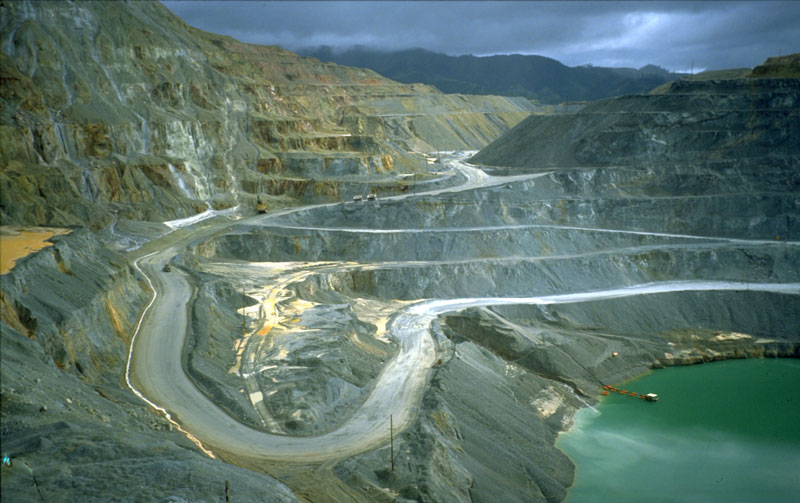
The tragedy of Marinduque is rooted in decades of destructive mining operations by a coppergold mine called Marcopper Mining Corporation (Marcopper), partly owned by Canadian mining company Placer Dome, which Barrick acquired in 2006. In 1993, mine waste from the failure of a siltation dam devastated the Mogpog River and buried two children. In 1996, the catastrophic failure of another waste impoundment flooded the Boac River with approximately 1.6 million cubic metres of mine tailings, damaging livelihoods, contaminating waterways, and threatening public health. Earlier dumping of mine waste into Calancan Bay (1975-1991) had also severely damaged marine ecosystems and fishing grounds. To date, none of these ecosystems have been rehabilitated.
For decades, affected residents, environmental advocates, and community organizations pursued justice despite prolonged legal battles and corporate resistance. The settlement is a significant achievement, but it is not the end of the struggle. What remains of the US$100 million settlement after legal fees have been paid is intended for environmental rehabilitation and remediation. It does not provide compensation to individual victims. Its implementation must be transparent, accountable, and guided by the meaningful participation of affected communities.
Lessons from People’s Advocacy and International Solidarity
Marinduque reminds us that justice is possible when communities refuse to give up. The persistence of affected residents, supported by grassroots organizations, environmental advocates, legal efforts, and international solidarity, helped sustain the demand for accountability across generations.
The experience also demonstrates the importance of cross-border solidarity in confronting corporate power. Organizations and advocates in Canada and the Philippines can help amplify community voices, expose environmental harm, and challenge the ability of corporations to escape responsibility by withdrawing from a country or changing ownership.
But a legal victory alone cannot restore damaged rivers, revive fishing grounds, or recover lost livelihoods. Lasting justice requires effective rehabilitation, public accountability, stronger corporate responsibility, and the active involvement of affected communities in decisions about their future.
From Marcopper to Pax Silica: Whose Development, Whose Future?
These lessons are particularly urgent as the Philippines engages with Pax Silica, a United States-led initiative focused on critical minerals, semiconductors, artificial intelligence, and resilient technology supply chains. As global demand for critical minerals and strategic infrastructure grows, the initiative raises important questions about resource extraction, economic development, and people’s sovereignty.
The experience of Marinduque warns against accepting promises of investment and economic growth without examining their human and environmental costs. Supply chains may be considered secure by governments and corporations while communities bear the consequences through damaged ecosystems, threatened livelihoods, land pressures, and unequal access to resources.
Who controls the Philippines’ natural resources? Who benefits from these investments, and who bears the risks? What protections will be available to Indigenous Peoples, farmers, fisherfolk, workers, and other affected communities? These questions are critical both in the context of Pax Silica, and as Prime Minster Carney aims to conclude a bilateral FTA with the Philippines at the ASEAN meeting in Manila this month that includes provisions on critical mineral supply chains and mining governance.
Development must not come at the expense of human rights, environmental protection, or democratic participation. Transparency, independent environmental and social assessments, respect for Indigenous Peoples’ rights, including free, prior, and informed consent and protection for environmental and human rights defenders must be fundamental requirements, not afterthoughts.
Our Commitment to Collective Action
ICHRP Canada and MiningWatch Canada along with our partners, are committed to supporting and advancing this campaign in collaboration with grassroots organizations, affected communities, environmental and human rights advocates, and other civil society partners in the Philippines and internationally.
We see an opportunity to connect the struggle for justice in Marinduque with broader efforts to challenge corporate power, defend people’s sovereignty, and protect communities confronting the consequences of extractive industries and emerging strategic investments. Our solidarity must go beyond celebrating a settlement. It must support its transparent implementation, meaningful environmental rehabilitation, and it must be aimed at ensuring there are stronger laws in place to prevent similar injustices from happening again.
The lesson of Marinduque is clear: there can be no genuine development without justice, no lasting investment without accountability, and no meaningful sovereignty when communities are excluded from decisions about their lands, resources, and futures. We stand in solidarity with the people of Marinduque and all communities defending their rights, their environment, and their right to determine their own future.
Justice for Marinduque. Corporate accountability. Sovereignty and dignity for the people.
###
References:
1. MiningWatch Canada. “Marinduqueños Commemorate Mining Disasters – Celebrate $100 Million Legal Victory
over Canadian Mining Company.” March 25, 2026. Background on the Marcopper disasters, community advocacy,
and the settlement.
2. Philippine Daily Inquirer. “30-year legal battle over Marcopper mine disaster impact ends.” October 10, 2025.
Reports on the Court of Appeals approval of the $100 million settlement and its payment arrangements.
3. MiningWatch Canada. “Justice Delayed – Thirty Villagers Win Decades-Old Case Against Canadian Gold Mine.”
June 21, 2022. Documents a separate legal victory for villagers affected by the 1993 Mogpog River disaster.
4. U.S. Department of State. “The United States and The Philippines Launch Plans for 4,000-Acre Economic
Security Zone to Shore Up Supply Chains: First AI-Native Industrial Acceleration Hub Under Pax Silica.” April 16,
2026. Official announcement of the Philippines’ participation in Pax Silica and plans for an industrial hub in the
Luzon Economic Corridor.
5. Philippine Information Agency. “DENR to weigh in on Marinduque-Barrick settlement amid rehab concerns.”
August 13, 2026. Reports on outstanding questions regarding the adequacy of the settlement and environmental
rehabilitation.
6. Philippine Information Agency. “Marinduque guv receives DENR go-signal to review Barrick Gold settlement.”
October 7, 2026. Updates the status of provincial government review and implementation processes.
ENDORSED BY:
- CANADIAN CENTRE FOR POLICY ALTERNATIVES (CCPA)
- CANADIAN NETWORK FOR CORPORATE ACCOUNTABILITY (CNCA)
- CANADIAN UNION OF PUBLIC EMPLOYEES (CUPE)
- UNITED CHURCH OF CANADA (UCC)
- KAIROS: Canadian Ecumenical Justice Initiatives
- STUDENT CHRISTIAN MOVEMENT (SCM-Canada)
- JUSTICE AND PEACE UNIT: Anglican Diocese of New Westminster
- MINING JUSTICE ALLIANCE (MJA-BC)
- INTERNATIONAL MIGRANTS ALLIANCE (IMA)
- BEACONSFIELD INITIATIVE
- ONTARIO COMMITTEE FOR HUMAN RIGHTS IN THE PHILIPPINES (OCHRP)
- CANADA-PHILIPPINES SOLIDARITY FOR HUMAN RIGHTS
- VICTORIA COMMITTEE FOR HUMAN RIGHTS IN THE PHILIPPINES (VicCHRP)