Originally posted by OLCA here.
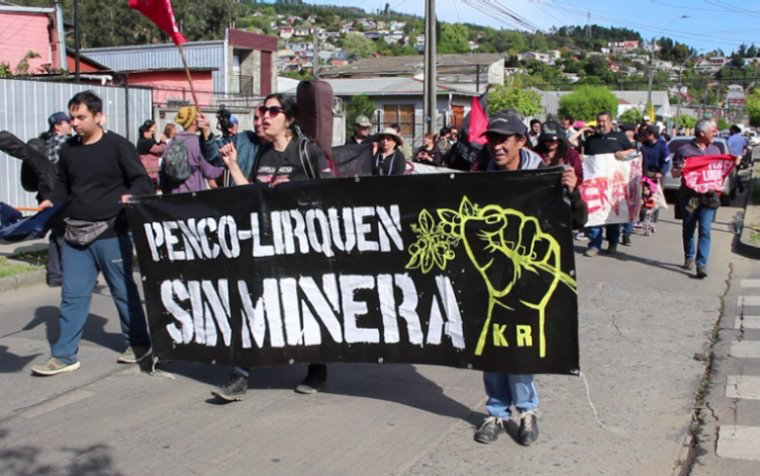
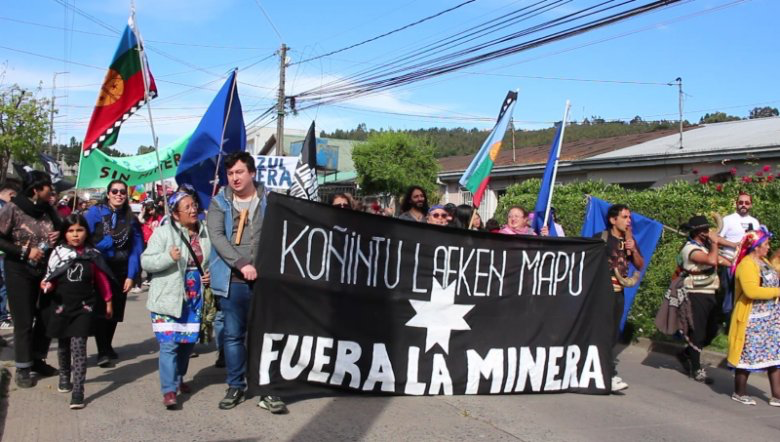
This Saturday, June 6, the streets of Penco and Lirquén will once again be filled with banners, signs, and slogans opposing the rare earth mining project being promoted by the Canadian company Aclara Resources. The march will take place just two days before a crucial vote on the project by the Biobío Environmental Assessment Commission, scheduled for June 8, amid growing criticism of the environmental review process and of political signals from the government of José Antonio Kast in favour of accelerating extractive investments.
The mobilization comes in the wake of controversy after the Biobío Presidential Delegation called the project to a vote before the publication of the Consolidated Environmental Assessment Report (Informe Consolidado de Evaluación Ambiental, ICE), a key document for the technical and public review of the project. For environmental organizations and local residents, this is evidence of political pressure to approve a project that faces strong community opposition.
The mobilization “is a demonstration of strength and another opportunity for us to publicly express our rejection of this mining initiative,” says Camila Arriagada González, spokesperson for the Penco Free of Mining campaign and former Regional Councillor for Biobío. She recalls that in 2022 more than 9,000 people participated in a community-organized referendum in which the majority rejected rare earth mining in the territory.
A Mine Just Steps Away from Residential Areas
One of the movement’s main concerns is the proximity of the mining operations to populated neighbourhoods. “We have residential communities that would be just one to one-and-a-half kilometres from the extraction zones. The operations are enormous, some covering more than 30 hectares, and the entire intervention would affect water, air, and soil quality,” warns Arriagada.
Penco is a municipality where the ocean, hills, and urban areas coexist within a narrow and highly interconnected geography. The project includes activities near the Penco Creek watershed, which crosses the entire municipality and forms part of the coastal ecosystem.
“The entire watershed would be affected. Our municipality is geographically small, so any intervention impacts the whole ecosystem,” she explains.
Residents also fear the loss of local economic activities linked to tourism and gastronomy. “We do not want to lose our community’s identity or become a sacrifice zone.”
More Than a Decade of Territorial Resistance
Penco and Lirquén have a long history of socio-environmental organizing shaped by previous conflicts against extractive and industrial projects.
One of the most significant was the resistance to the Penco-Lirquén LNG Terminal project, proposed in 2013 by Biobíogenera (formerly Octopus LNG). The project included a gas pipeline and energy infrastructure in Concepción Bay. Although it received favourable rulings at several stages, community mobilization and legal action succeeded in slowing and partially blocking its implementation.
“There was no Indigenous consultation. We won at the Supreme Court, and the environmental approval was invalidated. That taught us that administrative and political decisions are not final and that social pressure can change things,” recalls Arriagada.
That experience continues to guide the community. Even if the mining project is approved on Monday, opposition will continue through public mobilization, environmental courts, administrative appeals, and even international mechanisms.
“It is not definitive if the project is approved. A new phase opens in which people can continue actively participating in territorial defense,” she emphasizes.
She also points to more recent conflicts, such as the approval of a real estate project on the Paicaví Wetland in Concepción, where community organizations and municipalities are already preparing legal challenges and public protests.
Marching from Penco to Lirquén: Reconstruction and Neglect
Saturday’s march will travel from downtown Penco to Lirquén. “We want to walk through the entire municipality and also show solidarity with the people of Lirquén, who are currently facing a very difficult situation after the recent disaster,” explains Arriagada.
The spokesperson links that emergency to broader structural problems associated with the forestry model and denounces state neglect in reconstruction efforts. “There are neighbors who still have no solutions, many vulnerable families who did not own their land and have been left in an extremely difficult situation,” she says.
In this context, community members have struggled to fully engage in the environmental debate because they are dealing with urgent social challenges. According to Arriagada, the impending approval of Aclara Resources’ mining project is another expression of this politics of abandonment.
Rare Earths, Geopolitics, and “Green” Extractivism
The conflict in Penco is unfolding at a time when so-called “rare earth” minerals have become strategic resources for global supply chains related to electric vehicles, batteries, digital technologies, artificial intelligence, and even the arms industry, amid rising geopolitical tensions and armed conflicts worldwide.
During his State of the Nation address, President José Antonio Kast defended efforts to reduce environmental review timelines and criticized what he called a “maze of permits and appeals” that, in his view, obstruct investment. This narrative frames environmental institutions as bureaucratic obstacles rather than democratic mechanisms for ecosystem protection and citizen participation.
“The government is encouraging maneuvers that consolidate the neoliberal model, where global geopolitics and critical minerals become a transnational business that brings no real benefits to communities,” argues Camila Arriagada.
She contends that behind the discourse of energy transition lies a new cycle of extractivism. “This entire energy matrix is ultimately designed to generate more industries and enrich large corporations. There are no social or environmental benefits for communities.”
Arriagada also warns about the connections between critical minerals, the arms industry, and global conflicts. “The military industry and international conflicts also threaten the security of our communities. This is not surprising, but it is certainly a warning sign.”
A Political Laboratory for New Extractivism
Organizations such as OLCA increasingly view the Penco case as a political laboratory for a new extractivist cycle promoted by the state: the extraction of critical minerals, the weakening of environmental institutions, and the exclusion of communities from decisions affecting their territories, a process that began during the government of Gabriel Bori
The acceleration of environmental permitting, shortened review timelines, and pressure to “unlock investments,” promoted by the current far-right government, are seen as part of a strategy to advance projects considered strategic for the global economy, even in territories facing broad social opposition.
In this context, the June 6 march goes beyond a local dispute. It represents a broader struggle over the model of development being advanced in Chile. “We want to continue defending local economies, food sovereignty, and the value of water and soil. We do not agree with this way of defining progress,” concludes Camila Arriagada.
Just days before the environmental vote, the people of Penco and Lirquén are mobilizing once again to say they will not accept becoming a sacrifice zone in service of extractivism. Faced with a government determined to accelerate investment and weaken environmental oversight, communities insist that the defense of water, life, and territory is not negotiable.