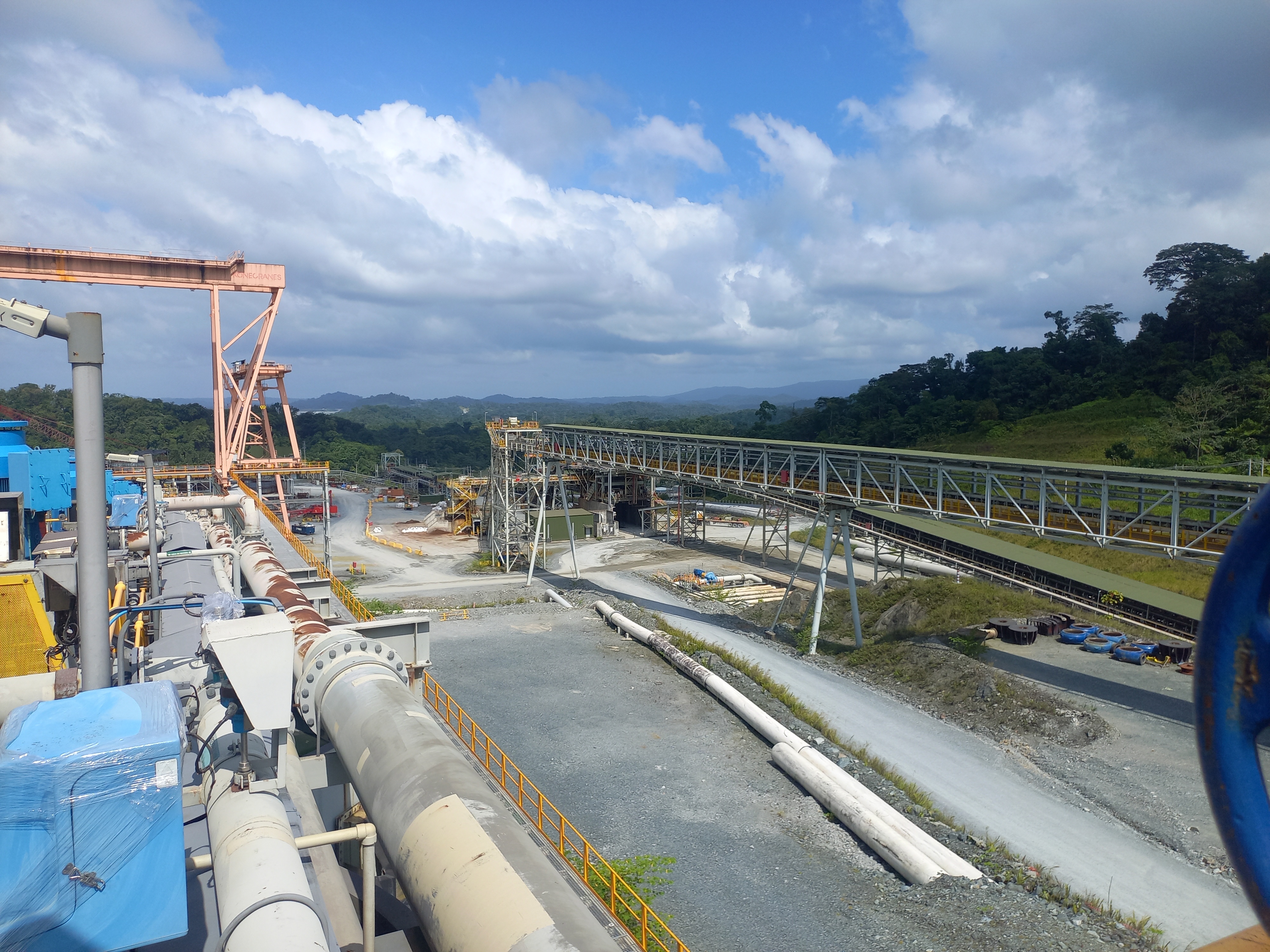
The following letter was sent to President of Panama, José Raúl Mulino, Minister of the Environment Juan Carlos Navarro, Minister of Commerce and Industries Julio Moltó, and First Quantum CEO, Tristan Pascall, by five international organizations, including MiningWatch Canada.
As international organizations with expertise in environmental justice, human rights standards and the harmful impacts of the mining industry, we have watched with concern as the Panamanian Government, First Quantum Minerals, and its partners delay a definitive closure process for the Cobre Panama mine and undermine the mine audit process. The demand for closure is founded in the strict compliance of the Supreme Court decisions from both 2018 and 2023.
At the end 2023, Panamanians took to the streets in massive numbers to protest the renewal of First Quantum Minerals’ Cobre Panama mine contract. First Quantum had been operating in legal limbo in the country since its original contract was ruled unconstitutional in 2018 by the Panamanian Supreme Court. Since then, and up to the 2023 protests, the company continued operating without the legally required contract. When news broke that the government was renegotiating another contract with the company despite the legal and environmental issues that had plagued the project, people took to the streets to say that, “Panama is worth more without mining.”
Faced with such strong opposition to the project, the government declared a moratorium on new mining concessions, concession applications currently under review, and expired concessions. Soon after, the Supreme Court unanimously ruled that First Quantum’s latest contract was unconstitutional, having violated 25 articles of the Panamanian Constitution. With its contract nullified for a second time, First Quantum was forced to suspend operations at Cobre Panama.
After the Supreme Court of Justice ruled the mine contract unconstitutional and mine operations were suspended, Panamanian environmental organizations, affected communities and the general public demanded an “in-depth, comprehensive and independent audit of the mine,” something the Panamanian Government agreed to.
An independent, rigorous and comprehensive audit is key to understanding the “true environmental and social impacts of the Cobre Panama project.” Nevertheless, the audit process being proposed by the Government has serious flaws.
The Technical Working Group for Mine Closure and the Panama Vale Mas Sin Mineria (Panama is Worth More Without Mining) movement have warned of the serious deficiencies related to the scope of the audit currently proposed.
In support of organizations and civil society in Panama, the international organizations that have signed onto this letter echo the concerns listed below regarding the audit of the Cobre Panama mine:
- Over half of the environmental commitments made by First Quantum have been excluded from the audit.
170 environmental commitments found in the mine’s Environmental Impact Study (Category III) have been categorized as outside of the scope of the audit. In doing this, the government removes a means for identifying commitments that are in non-compliance.
The argument provided for excluding these commitments is that they were completed during the construction phase of the project. But the audit is responsible for verifying completion. Similar reasoning was provided for excluding commitments that correspond to the operation and closure phases, ignoring the existence of the forms of verification for many of the commitments of the operational stage and that the company is obliged to maintain an updated project closure plan that must be evaluated by the auditing firm.
Some of the commitments that have been excluded include: the verification of certain design and safety aspects of mine infrastructure, and water quality impacts, human rights standards, and regulations involving local hiring and purchasing.
- The Ministry of the Environment did not include important aspects of their own draft documents or recommendations from civil society and other stakeholders in the final audit scope.
The draft submitted to the general public for consultation by the Ministry of the Environment in January 2025 promised a comprehensive and independent audit with the primary goal of generating information that is essential to “start the definitive closure process for the Cobre Panama Mine.” The edited version released by the Ministry of Commerce in May also has the stated goal of a structured closure process. This key goal and any associated content has disappeared completely from the final text that was used to hire the audit company.
The Technical Working Group and other stakeholders alerted the Ministry of the need to include areas outside of the mine concession in the audit, considering the impacts of mine infrastructure in this area. They also recommended a microbiology monitoring study, as well as studies on water quality and quantity. The final document does not include their recommendations.
- Public access to the audit results is not guaranteed.
The terms of reference submitted for public consultation by the Ministry of the Environment established that, in accordance with the Escazu Agreement, “all information from the audit process is public.” It also states that the audit must be made publicly available, including a summary that uses non-technical language. This has been eliminated in the final version.
For these reasons, we support the demand that the Ministry of the Environment and competent authorities correct the terms of reference for the audit to guarantee a comprehensive audit that can be used to protect ecosystems and communities.
We request that, in order to uphold transparency and consistency, the relevant authorities explain why the document used in the public contracting process contains key differences from the document used in the January public consultation. And that they urgently incorporate the changes necessary so that the audit process complies with the original agreement between the government and civil society.
We are concerned that the current scope and terms of reference of the audit could lead to a process that lacks legitimacy and generate results that are used to justify and facilitate the reopening of the Cobra Panama mine, in direct contradiction of public opinion, the Supreme Court decision, and the mining moratorium. First Quantum and its partners must completely desist from any international arbitration against Panama and instead collaborate in good faith towards a permanent closure of the mine and support a comprehensive audit process.
Signatories,
MiningWatch Canada
Earthworks
Common Frontiers
Terra Justa
Institute for Policy Studies - Global Economy Program