Publication

Submission to the Marathon Palladium Project Joint Panel Review

These comments were submitted to the Joint Panel reviewing the environmental impact of the proposed Marathon Palladium Mine. We have reviewed documents filed for investors by Generation Mining, particularly the Feasibility Study (FS) and the 2020 Annual Information Return (AIF). We also researched the history of the mine’s proponents by talking to communities where they had operated and searching publicly available literature. 
Both research projects unearthed some serious concerns about the Marathon Mine of which the Panel needs to be aware. These issues are:
Publication

Comments on the Impact Assessment Agency of Canada’s Draft Agreement to Conduct a Regional Assessment in the Ring of Fire Area

Given that the process of negotiating the draft agreement excluded the region’s First Peoples, and that they are similarly excluded from any significant role in the proposed governance of the regional assessment, we insist that rather than a revision of the draft agreement – even one that engages seriously and meaningfully with the recommendations that MiningWatch and many other knowledgeable and thoughtful intervenors have put forward – the regional assessment process must be restarted in order to make a serious attempt to fulfil Canada’s obligations towards Indigenous peoples, including under the United Nations Declaration on the Rights of Indigenous Peoples, and undertake to co-design a regional assessment process that meets their needs and criteria and supports their self-determination.

Publication

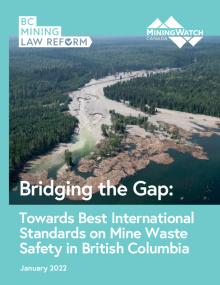
Bridging the Gap: Towards Best International Standards on Mine Waste Safety in British Columbia

In 2014, a dam breach at Imperial Metals’ Mount Polley mine resulted in the largest mine waste disaster in Canadian history. Over 24 billion litres of solid and liquid mine waste rushed downstream into the Quesnel Lake watershed, leading to a drinking water ban and destroying kilometres of forest and fish habitats in its wake. Long-term effects of this disaster, such as contamination of lake sediments and species, are still being monitored. 

Publication

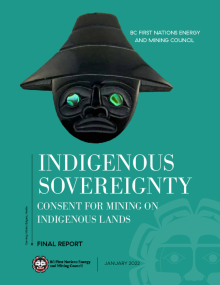
Indigenous Sovereignty: Consent for Mining on Indigenous Lands

The Indigenous Sovereignty: Implementing Consent for Mining on Indigenous Lands is a new report prepared by the BC First Nations Energy and Mining Council (FNEMC) setting out 25 recommendations which, if implemented, would compel mining companies and prospectors to secure the approval of First Nation governments in order to obtain consent-based access to First Nations' lands. They would further be required to agree and abide by conditions set by those First Nations governments.