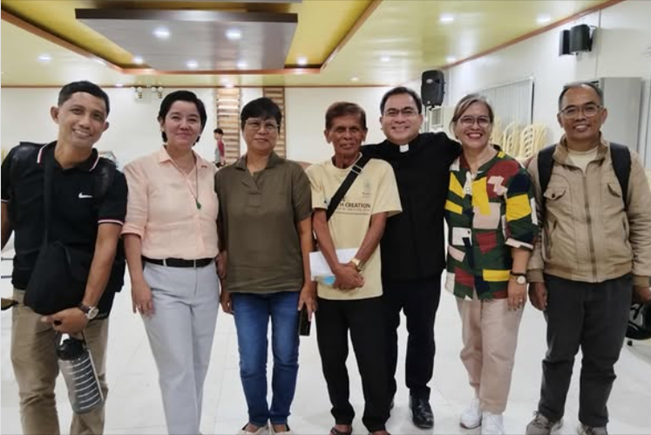
Yesterday, people from the small Philippine Island of Marinduque came together to commemorate the mining disaster of March 24, 1996, that filled their Boac River with mine waste from the mountains, where the Marcopper Mine was located, to the sea. The mine was closed after the disaster and remains so. A year after the Boac spill, the Canadian company associated with the disaster, Placer Dome, reported that it had divested from the mine. Placer Dome had co-owned and managed the Marcopper Mine since 1969. In 2001 Placer Dome left the Philippines suddenly, just before Christmas, leaving behind not only the un-rehabilitated Boac River, but also the contaminated Mogpog River, which has never recovered from another mine waste spill in 1993 that buried two young children, and the ongoing disaster of Calancan Bay, where the Marcopper Mine dumped some 200 million tons of mine waste into the shallow bay over 16 years (1975-1991), covering coral reefs and destroying the fishing grounds for 12 villages that surround the bay.
During a day-long round-table discussion, Marinduqueños reviewed and discussed these decades of tragedy and suffering brought on by the Marcopper Mine, as well as their longstanding search for justice for the people of Marinduque and for rehabilitation of the ecosystems degraded by mining. This struggle for justice has included many efforts to seek justice through various courts both in and outside of the Philippines.
The commemoration was organized by the Marinduque Council for Environmental Concerns (MACEC). MACEC was founded in 1996, in the wake of the Boac River tailings spill disaster. The round-table discussion was held in the Sacred Heart Diocesan Pastoral Center. The Catholic Church on Marinduque has long supported efforts by Marinduqueños to stop harmful mining on the small island and to seek justice for the people and ecosystems that have been devastated. The gathering included church leaders, such as Bishop Edwin Panergo, dignitaries and elected officials, such as members of the Provincial Board and mayors, or their representatives, from the three municipalities most heavily affected by mining.
MACEC noted “this date is a somber reminder of the 1.6 million cubic metres of toxic waste that devastated the Boac River, but it is also a testament to the decades-long resilience of the Marinduqueño people.” In particular three Marinduqueños were honoured yesterday: Eliza Hernandez, Mamerto Lanete and Godofredo Manoy. Of these three, only Mamert Lanete is still alive and was able to participate in the day of commemoration and celebration.
Eliza, Mamerto and Godofredo were celebrated as the plaintiffs in a lawsuit that was filed in 2011 against Placer Dome and Barrick Gold (Barrick Gold, now Barrick Mining, acquired Placer Dome in 2006). The reason for celebration was that on October 3 of last year, this lawsuit successfully resulted in a 100 million US dollar settlement from Canada’s Barrick Mining.
The plaintiffs had filed their lawsuit under the Writ of Kalikasan, a Philippine legal remedy based on the constitutional right to a healthy environment.1 The settlement does not provide individual remedy for the plaintiffs, but is intended solely for the restoration of the environmental harm that has been caused by mining in Marinduque.
As MACEC stated during the commemoration yesterday: “we are currently at a historic crossroads. Following the court of appeals approval of the $100 million settlement agreement with Barrick Gold Corp (Placer Dome), we transition from a season of litigation to a season of restoration. It is our collective duty to ensure the settlement is not merely a legal victory on paper, but a catalyst for the physical and ecological healing of our province.”
For more information contact: Catherine Coumans, catherine@miningwatch.ca
[1] Article II, Section 16 of the 1987 Philippine Constitution provides Filipinos the right to a "balanced and healthful ecology."