Trudeau government’s support for Peruvian coup regime all about Canadian mining companies
Canadian mining firms dominate in Peru with $9.9 billion in total assets
By Yves Engler, Canadian Dimension
Canadian mining firms dominate in Peru with $9.9 billion in total assets
By Yves Engler, Canadian Dimension
B.C.'s mining sector is hopeful about prospects to capitalizing on the push for clean energy with eight new or expanded mines on the books
Derrick Penner, Vancouver Sun
Mining exploration was already heating up in B.C. before Ottawa released its critical-minerals strategy in December.
In our October 2022 report, and in our letter to you of 18 October 2022, we provided details of our findings while in North Mara in September and October in regard to forced evictions and related human rights abuses suffered by people of Komarera village, who are being forced out of their homes and off of their land, without adequate compensation and resettlement, to make way for the expansion of your North Mara gold mine.
(Ottawa, Chiapas) The Supreme Court of Canada has refused to hear an appeal from the family of assassinated Mexican environment defender Mariano Abarca, effectively shutting the door in Canada to any investigation into the role Canadian diplomacy may have played in endangering Mariano’s life.
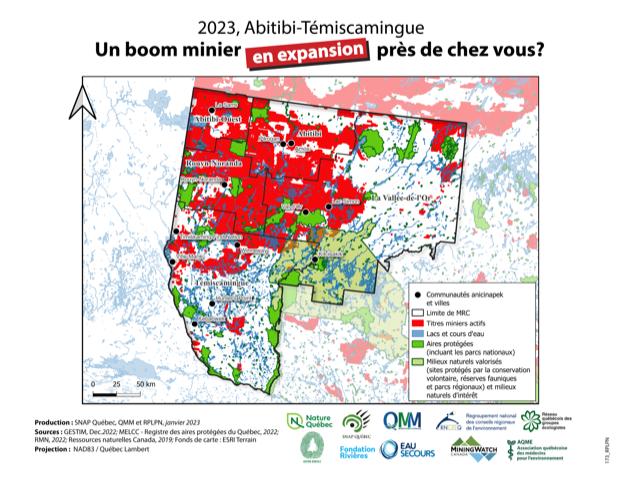
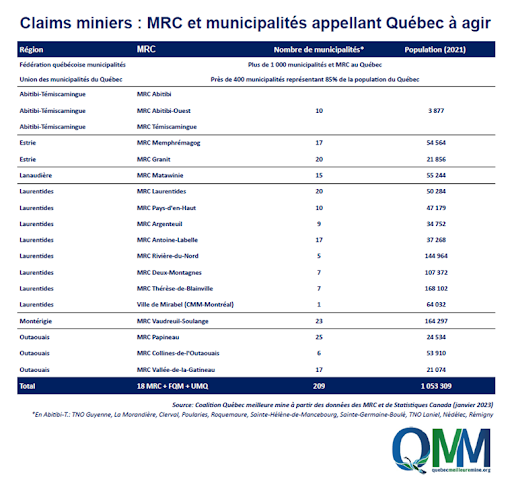
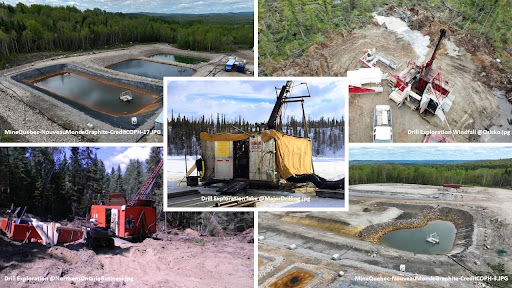
(Quebec) In the lead up to the Municipal Forum on mining and social acceptability, a coalition of organizations has unveiled a new map indicating a +46% boom in mining claims over the past two years in Abitibi-Témiscamingue, making it the region with the most mining claims in Quebec. Ten municipalities in Abitibi-Témiscamingue are now joining the national movement of municipalities and organizations calling on the government to strengthen the legal framework with respect to “Territories incompatible with mining (TIAM),” in order to protect water, biodiversity, and local populations.
Ben Radford, The Green Left
Transnational companies are forging ahead with plans to exploit the seafloor for valuable minerals, despite widespread concerns about the potential ecological and climate impacts. Large-scale deep-sea mining involves the extraction of polymetallic nodules, which are small rocks formed over millions of years containing cobalt, nickel, copper and manganese.
Water Today interviews Dr. Catherine Coumans about the role Canadian mining companies are playing in the race to mine one of the most ecologically sensitive places on the planet: the deep seabed.
Mining companies with projects in the North say more federal support is needed following the release of Canada’s new critical minerals strategy, while some environmental advocates are wary of the potential impacts. Jamie Kneen with MiningWatch Canada said the strategy ignores many issues relating to mining. “What we’ve got here is a plan to promote mining, not a plan to really ensure that Canada’s doing anything more than accelerating the kinds of extractive processes of an extractive economy that we’re already engaged in.” Kneen said there should be greater emphasis on planning and co-ordination with Indigenous governments so communities can adequately engage with and respond to resource projects.
Written by Santiago Navarro, Avispa Midia
Keving Hernán Sánchez, an Indigenous Zoque man from Oaxaca, Mexico, left his community at a young age to move to the state’s capital and study literature. He never imagined that after graduating and returning to his territory he would have to learn how to defend it, but that is what happened when a mining project threatened to tear apart the social and environmental fabric of his town.
Hundreds of groups around the world worked with the Salvadoran Water Defenders in the successful campaign to save the country's rivers from toxic gold mining. They join in demanding the release of the five Water Defenders and to allow them to await their trial in their community.